A Colorado Springs judge has ruled that the suspect in a mass shooting at Club Q, a gay club in the area, will face hundreds of charges at trial. The ruling came after two days of evidence and witness testimonies, which painted a picture of Anderson Lee Aldrich: a murder and weapon-obsessed neo-Nazi with a history of homophobia and racism.
Five people were killed in the shooting: Raymond Green Vance, 22; Daniel Aston, 28; Ashley Paugh, 35; Derrick Rump, 38; and Kelly Loving, 40. 19 were injured.
Aldrich, who claimed to identify as nonbinary while in hospital after the shooting, was originally charged with 305 counts, including attempted murder, assault and bias-motivated crimes. Fourth Judicial District Attorney Michael Allen amended the charges in January 2023, adding 12. Six more charges since have brought the total amount to 323.
The Hearing
Survivors and the victims’ families filled up the courtroom. As witnesses took the stand and photographs from the scene were shown, some people in the audience could be heard sobbing.
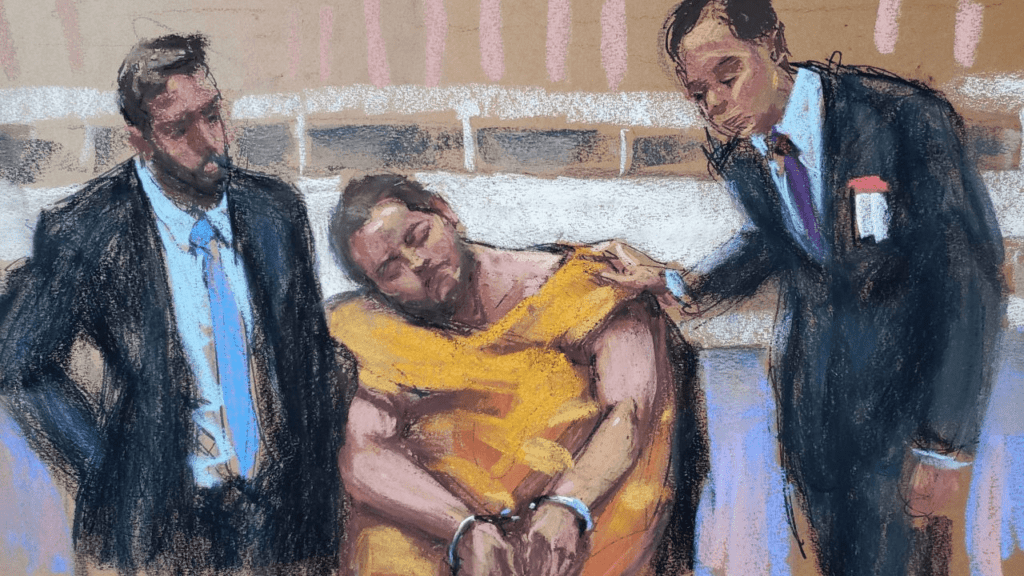
Aldrich was present, shackled at the ankles and wearing orange jail clothing. The back of the suspect’s head appeared scarred, possibly due to patrons who said they beat and tackled the assailant to the floor.
On day one of the hearing, prosecutors brought four officers and detectives, who worked on the case, to the stand.
Aldrich premeditated the attack. According to police testimonies during the first day of a preliminary hearing in El Paso County, Aldrich visited the club six times before deciding to open fire.
On the night of the attack, Aldrich went to Club Q shortly after 10 p.m. and stayed a while before leaving. He returned at around midnight to open fire on patrons.
Officer Connor Wallick of the Colorado Springs Police Department said that when he entered the club, he saw the suspect on the ground wearing body armor. Another person was on top of the suspect, holding a gun in his hand. This could have been army veteran Richard Fierro or Navy petty officer Thomas James, patrons who spoke about tackling, taking down and subduing the shooter, with the help of other clubgoers.
Wallick said Aldrich attempted to blame the shooting on others and refused to cooperate.
Witness Detective Jason Gasper said there was an explosive device and a pistol in the suspect’s ballistic vest. The shooter also carried an AR-style rifle and multiple magazines.
Detective Ashton Gardner testified that Thomas James was the first to approach Aldrich during the shooting. The Navy petty officer grabbed the barrel of the gun and tackled Aldrich. He was shot in his torso but held the position until emergency officials arrived. Gardner also confirmed that Richard Fierro helped tackle and disarm Aldrich.
Gardner gave detailed accounts from survivors. He said that clubgoers helped put pressure on wounds until first responders arrived. Many survivors suffered multiple gunshot wounds and other injuries.
One woman was shot in the face as she tried to escape with her daughter. Another woman was shot in the back as she ran. Other played dead, hoping the shooter would not attack them.
Hate Crime Evidence
Rebecca Joines, the lead detective in the case, said that in Aldrich’s prior visits to Club Q, the suspect had bought drinks, done karaoke and attended a drag show. An online friend told police that Laura Voepell, Aldrich’s mother–who also apparently identifies as nonbinary–had forced Aldrich to go to gay bars.
The same online friend said that Aldrich was obsessed with homicide and Nazism. The friend said that Aldrich hated minorities, police and LGBT people.
Detective Joines said that Aldrich, who is a registered Mormon, ran a neo-Nazi website. The suspect’s website was a forum-type “free speech” format, where people anonymously post racist and antisemitic memes, language and videos.
Aldrich had pictures of a rifle scope on a gay pride parade. Detective Joines said that the suspect would use a slur when referring to someone who was gay and would use homophobic and racist slurs when gaming online.
Detective Gasper said detectives found shooting targets with bullet holes in the suspect’s apartment. One of the targets had rainbow colors coming from the bullseye. Officers said they found a hand-drawn map of Club Q in the apartment, as well as various items to build guns and ammunition.
A note on a yellow pad, written in childlike handwriting, was found in the suspect’s apartment. It read: “Please relieve me of my own fate. I’m drowning in my own wake. How long must I wait for you to rid me of this hate?”
Police said they found a baseball cap with a cell phone duct-taped to the bill–camera facing out–in Aldrich’s car, parked outside of Club Q on the night of the shooting. They said that Aldrich had a QR code on the front of the ballistic vest worn during the attack. Prosecutors said this was evidence that Aldrich planned to live stream it all through an app.
No evidence was found to suggest that Aldrich seriously identified as nonbinary. Even if that was the case, and Aldrich does actually subscribe to a gender identity, it would not make the suspect immune from homophobia or bias-motivated crimes targeted at LGBT people.
The Defense
Defense attorney Joseph Archambault focused on Aldrich’s mental health struggles. Attorneys showed photographs of almost a dozen prescriptions for diagnoses like schizophrenia, bipolar disorder and anxiety. The suspect also had a prescription for suboxone, which is used to treat opioid addiction.
Aldrich appeared to cry in court, rocking back and forth while an attorney patted the suspect’s shoulder and said “It’s OK.” Aldrich left the room crying when the hearing was called into recess.
“What happened here was senseless, awful and it was tragic,” defense attorney Joseph Archambault said in court. “But Aldrich’s behavior after this incident says they’re sorry, upset and emotional about what they did. … It’s categorically different than someone who targets a group, and that’s not what Aldrich did. … We have someone who was on a lot of drugs and had mental health issues.”
Adriana Vance’s son, Raymond, was one of the victims. She said the suspect’s mental health isn’t relevant. “To me, that has nothing to do with it. At the end of the day, he still went in there and killed people and hurt a lot of people.”
Referring to when Aldrich cried during the hearing, especially when detectives testified about people’s injuries and Aldrich’s home life and mental state, Vance said, “He was crying for himself…But he’s going to have a lot more crying to do, so he should save some of those tears right now.”
Fourth Judicial District Attorney Michael Allen said that a recent change in state statute helped solidify the hate crime charges. Bias-motivated crime can be considered even if aspects of the victim, such as race, religion or sexual orientation, are only part of the reason they were targeted.
Allen also said that there’s a decent chance the case won’t be brought to trial until 2024. “That’s just speaking through relative terms as it relates to the lifespan of a case in the court system,” Allen said. “If we have other outside forces like a COVID pandemic that rears its head again or something like that, that could obviously have a negative impact on our ability as well.”
Another hearing has been set for March 31. It will determine whether Club Q’s surveillance footage from the night of the shooting will be released to the public.
Aldrich will remain in custody without bond.