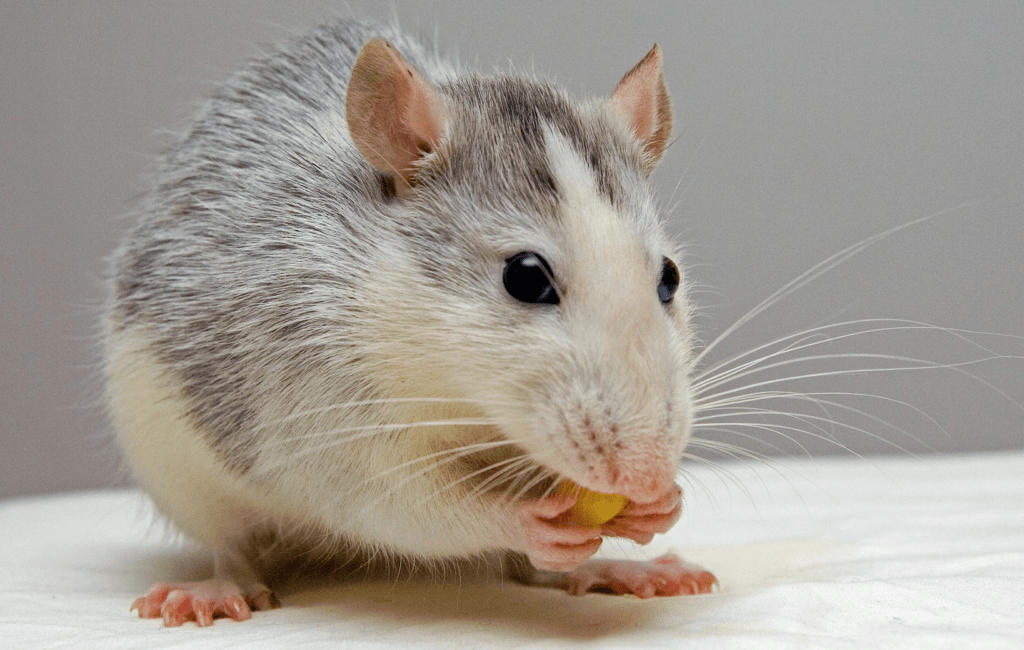
Gays love Lady Gaga. Rats love Lady Gaga: researchers at the University of Tokyo have discovered that rats love bopping away to her gayest hit, “Born This Way.” Coincidence? I think not.
Yep, nodding along to a banger is not just a human thing. By attaching miniature sensors to the animal, which detects even the slightest of ratty movements, university researchers have discovered that rodents synchronize their movements to a beat — especially when it comes to Lady Gaga.
“Rats’ brains are designed to respond well to music,” said associate professor Hirokazu Takahashi, who was part of the team who conducted the study.
“We all believe that music has magical powers, but we don’t know anything about its mechanisms…[So] we wanted to find out what kind of sound connections appeal to the brain, without the influence of emotion or memory.”
Of the dance movements, “bopping” was most pronounced in rats for music with a range of 120-140 beats per minute — which is the same in humans. The study has led scientists to hypothesize that “dancing” to music is possible across many different species, ultimately reminding humans that we are merely animals.
“Music moves the body. It goes beyond the auditory system and affects the motor system … the power of sound is that great,” Takahashi said.
The research had mainly focused on classical music, such as Mozart’s Sonata for Two Pianos in D Major, K. 448, played at four different tempos, until Takahashi’s students suggested they try songs with a driving rhythm, including Queen’s “Another One Bites the Dust”.
This was the first time the rats in the study had listened to music. The effect of music on rodents has been overlooked until now because previous research used video footage to document “dance” movements, rather than movement sensors, making it impossible to detect the small animal’s tiny movements.
Takahashi hopes to go beyond rhythm to explore the effects of melody and harmony on the brain.
“If music has an emotional effect, it would be really interesting if we could get to the point where we could see it in animals,” he said.
The study was published in the peer-reviewed Science Advances journal in November 2022.